The Militancy of the UAW Strike Forced Joe Biden to Take a Side and Walk the Picket Line
Today Joe Biden became the first sitting US president to walk a picket line when he joined striking autoworkers. It says less about him than it does the electrifying effects of the strike — forcing politicians, and everyone else, to side with either workers or CEOs.
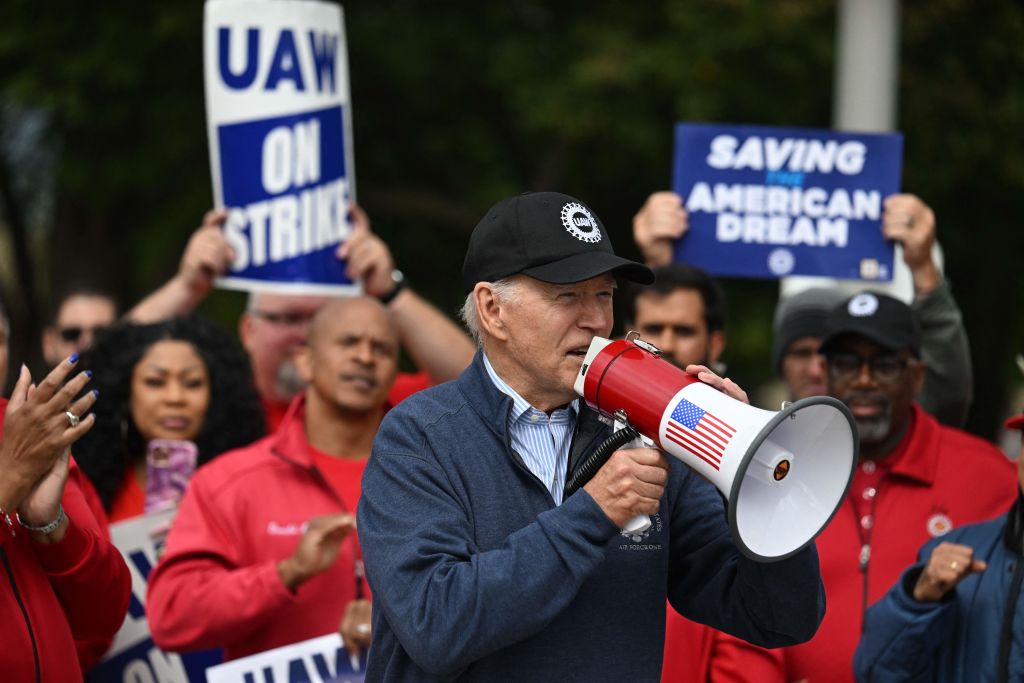
Joe Biden addresses UAW strikers on a picket line outside a GM plant in Belleville, Michigan. (Jim Watson / AFP via Getty Images)
Today President Joe Biden traveled to Detroit to join members of the United Auto Workers (UAW) on the picket line in their strike against the Big Three automakers. The move was Biden’s strongest signal of support yet, after a number of more equivocal statements about the ongoing contract dispute. He is the first sitting US president in history to walk a picket line.
Biden’s transportation secretary, Pete Buttigieg, declared that Biden went to Detroit because he is “deeply pro-worker.” One might doubt Buttigieg’s assessment, given that — despite Biden’s admirably pro-labor National Labor Relations Board — the president intervened to stop railworkers from striking over eminently reasonable demands less than a year ago and has so far been content to fund a transition to electric vehicles (EVs) with little regard for workers. (Buttigieg himself went on to qualify his statement: the president, he says, wants “the auto sector to succeed as well” and is “pushing the parties to get to a win-win deal that does right by workers.”)
In any case, to look at Biden’s decision as simply reflecting his personal commitments is to miss the bigger picture. Biden is looking toward reelection, Michigan is a crucial swing state, and the president and his team almost certainly feel a trip to the UAW picket line will be a boon to his electoral odds. And considering union favorability is at an all-time high and a majority of Americans support the UAW walkout, they’d be right to think so.